Tips & Tricks
Custom Website vs Template for Dayton Small Businesses
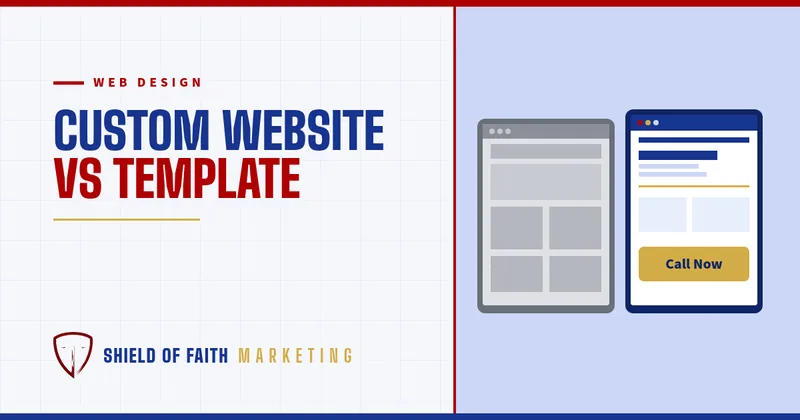
Quick answer: For a simple business with a few services and a contact form, a well-built template can do the job. For a business that depends on its website to bring in calls and quote requests, a custom website is usually the better fit because it is planned around your customers and your next step, not a pre-made layout. The right choice depends on what your site has to do, how much time you have, and who will keep it current.
If you are a Dayton small business owner weighing these two options, this guide is a decision tool. It does not rehash pricing. For what drives the cost of each route, read our Dayton small business website cost guide.
What a Template Website Is
A template is a pre-built layout. You swap in your logo, colors, photos, and text. The structure (where the menu sits, how a page is arranged, what sections exist) was decided before anyone thought about your business.
That is its strength and its limit. The structure is already made, so you can get started quickly. But it is a structure that other businesses may also be using, and it was not built around how your customers decide.
What a Custom Website Is
A custom website starts from your business instead of from a layout. The pages, the order of information, and the buttons are planned around your services, your service area, and the action you want a visitor to take, whether that is calling, booking, or asking for a quote.
Custom does not mean complicated. A small custom site might be five well-planned pages. The difference is that each page was designed for a reason.
Where Each Option Fits
| Question | Template tends to fit | Custom tends to fit |
|---|---|---|
| What does the site need to do? | Show basic information | Bring in calls, bookings, or quote requests |
| How many services do you offer? | One or two, simply described | Several, each needing its own page |
| How much time do you have? | Time to build and edit it yourself | Little time; you want it handled |
| Do you plan to add pages or features? | Not soon | Yes, as the business grows |
| How important is standing out? | Not a priority | Important in a crowded local market |
No row decides it alone. Read them together.
Questions to Ask Before You Choose
- What is one action you want a visitor to take? If you cannot name it, start there. Either option works better with a clear answer.
- Who will write the content? Both routes need clear words and good photos. A template does not write them for you.
- Who will make changes after launch? If the answer is “me, when I find time,” be honest about whether that will happen. Our web design services include a Care plan where you send us changes and we publish them.
- Does the layout let you say what makes your business different? A fixed layout can make that hard.
- Will the site have room to grow? Think about extra service pages or a page for each town you serve.
Local Service Businesses Need Local Pages
Dayton customers often search for a service plus a place. A contractor, a fitness studio, or a bakery may want a page for each service or each town served. A layout that is limited to a handful of fixed pages can make that harder to set up. A custom plan can include those pages from the start. If you also want help being found after launch, see our local SEO services.
Starting With a Template and Moving On
Starting simple is a reasonable choice for a new business with a tight budget. If you do, keep your copy, photos, logo, and contact details in one folder. Those carry over to a custom site later. The page layouts usually will not, so plan on rebuilding those.
How to Compare Proposals
When you request a quote, ask each provider the same questions: How many pages are included? Who writes the content? What happens after launch? Who makes changes, and how do you request them? Then compare the answers side by side. Our conversion guide for small business websites can also help you decide what to measure once the new site is live.
Frequently Asked Questions
Is a template website good enough for a small business?
It can be, if your business is simple: a few services, a contact form, and no plans to grow the site soon. It is a weaker fit when the website is a main source of calls and quote requests.
Is a custom website worth it for a Dayton small business?
It is worth considering when the site needs to bring in customers. A custom build is planned around your services, your service area, and the action you want visitors to take, instead of fitting your business into a pre-made layout.
Can I start with a template and switch to a custom site later?
Yes. Many businesses do. Keep your written copy, photos, and logo organized from the start so they carry over to a new design, and expect to rework the page layouts.
Who updates the website after launch?
With a template you built yourself, updates are usually your job. With Shield of Faith Marketing, our Care plan means you send us the new copy, photos, or hours and we publish the update for you.
How do I decide between a custom website and a template?
Start with what the site must do for your business. If it only needs to exist and list basic information, a template may be enough. If it needs to turn visitors into calls and quotes, ask a designer to show how a custom layout would do that.
The Bottom Line
Choose a template when your needs are simple and you have time to manage it. Choose a custom website when the site is a real way for customers to find and contact you. Either way, decide first what you want visitors to do.
If you want a website built around a clear next step for your customers in New Carlisle and Dayton, see our website design services, or call us at 326-214-3393.